Most demos of AI app builders stop at a screenshot. Something appears on screen, it looks convincing, and the story ends before the part that matters. The app is never published, nobody ever uses it, and no money ever moves.
So here is one that went the whole way. KOPPAR is a coffee storefront built entirely in Instroc. It is still live at koppar.instroc.app, so you can click through it rather than take this post's word for anything.
It is a store, not a picture of a store
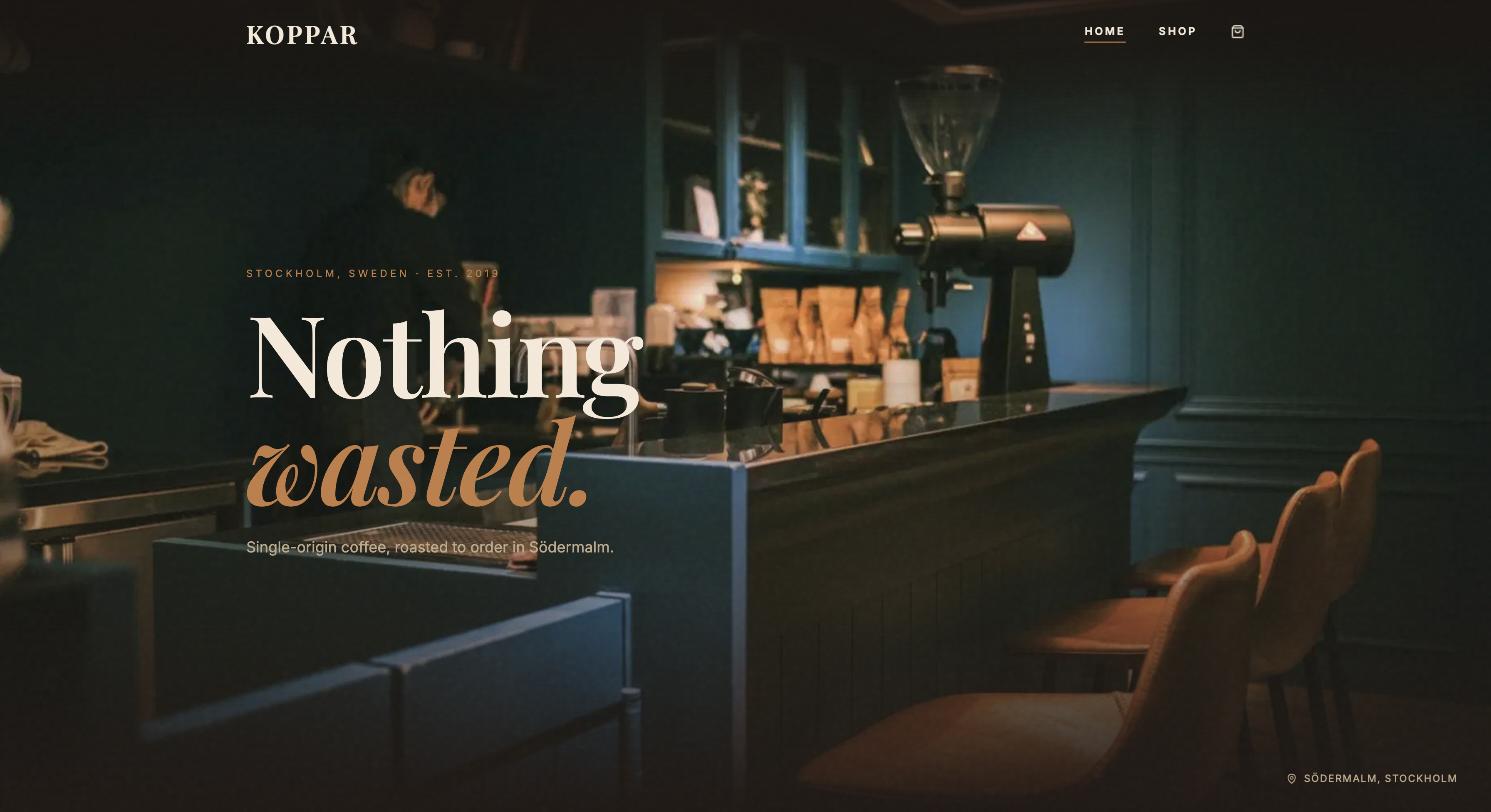
The hero is not a photo. It is a short scroll sequence filmed inside Instroc from a single still of the shop, so the scene moves as you scroll. The products come out of a real database. The cart holds state. The checkout charges a card. Sign-in, file storage and hosting came with the app rather than being added to it afterwards.
That distinction is the whole point. A generated page that looks like a shop is a design exercise. A shop that can take your money is a business, and the gap between the two is where most projects quietly stop.
The payment chain was proven with a live card
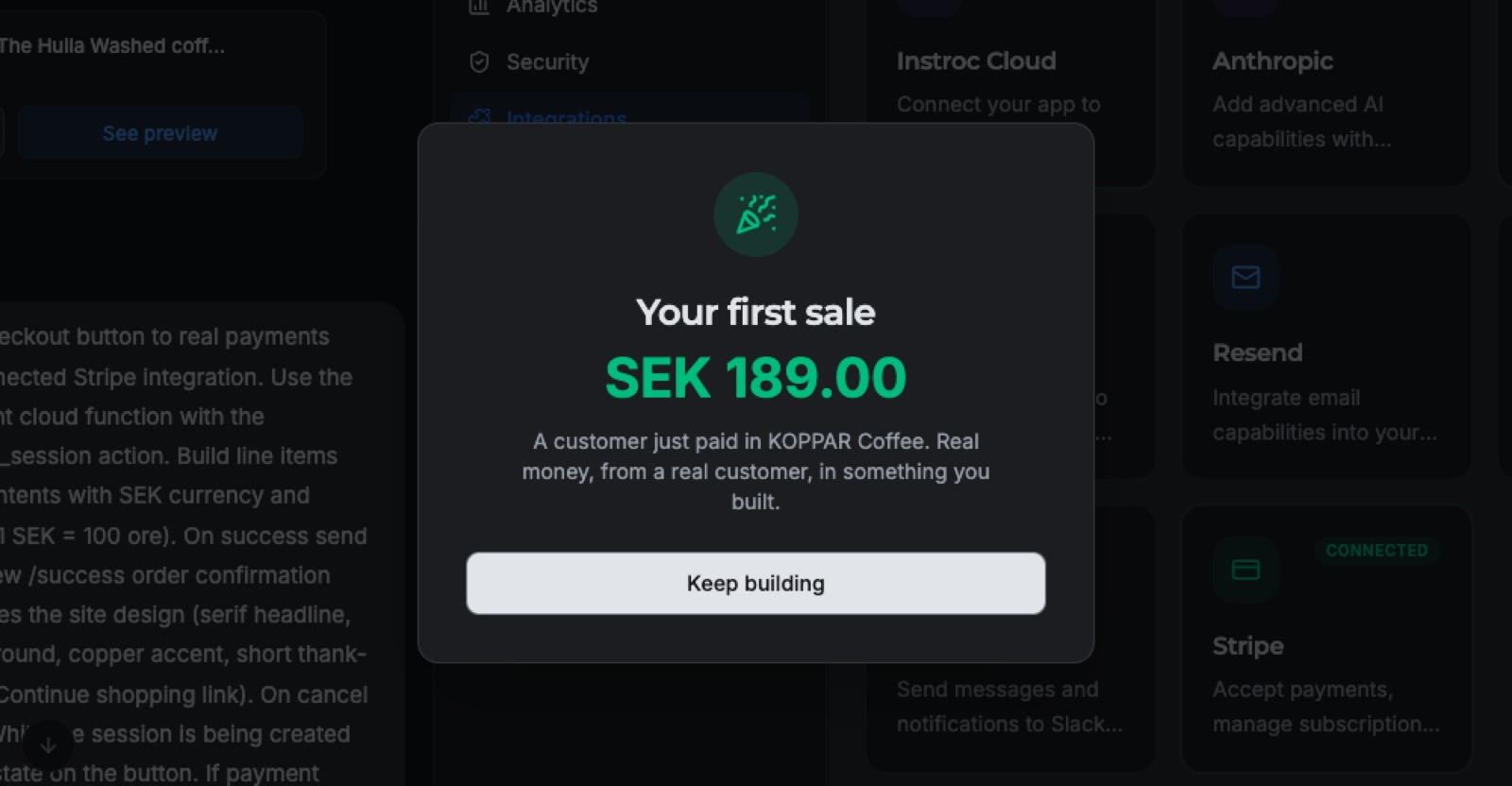
To check the store end to end we bought from it ourselves, with a real card rather than a test one. The money left a bank account, went through the checkout on the published store, and settled into the company's business account afterwards.
That is not a customer, and we are not going to dress it up as one. It is something more useful for anyone deciding whether this works: proof that every link in the chain holds under real money. The product page, the cart, the checkout, the payment account, the published URL, the record landing back in the dashboard, and the payout arriving days later.
Most side projects never test that chain at all. They stall earlier, in the week of work between having something that looks finished and having something that can charge for itself.
Why payments usually kill projects
The normal path is to build the app, polish it, and add payments later. Later arrives and it turns out to mean API keys, webhook endpoints, a payments table, a test environment and a second dashboard to reconcile against. The energy that survived building runs out at the checkout.
KOPPAR skipped that week. Payments were connected once from inside the app, and the checkout was wired up as part of the build rather than bolted on after it. There were no keys pasted into config files and no webhook endpoint to stand up.
What is worth copying from this
Build the thing people pay on first. The about page, the polish and the extra features can wait. Money moving once teaches you more than a month of refining a landing page.
Describe how it earns in your first sentence. If the payment is part of the description, it is part of the build.
Publish before it feels ready. A live URL you are slightly embarrassed by beats a perfect app on your laptop, because only one of them can take a payment.
See it yourself
KOPPAR is still running at koppar.instroc.app. Click into the shop, add something to the cart, and take it as far as the checkout.
Then build your own and get it to the same place.